
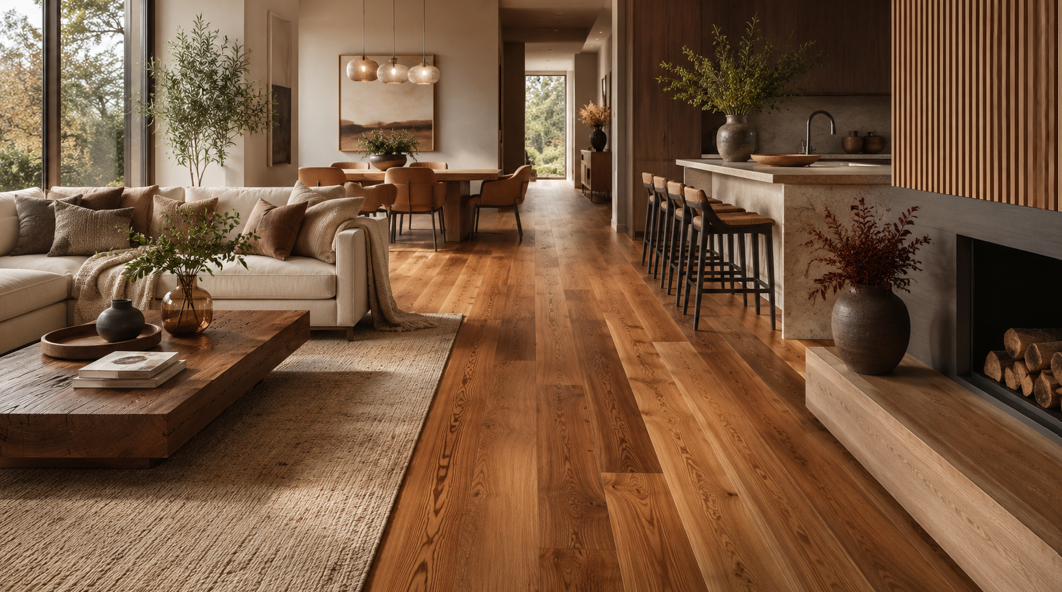
Timber transforms a room with natural grain, varied tones, and a surface that softens stark architectural lines. In an open-plan home, it links living and dining areas without relying on colour alone. Its appeal goes beyond appearance: a well-chosen floor supports a coherent interior and gives buyers a clear sense of care. The result depends on proportion, finish and suitability for daily use, so thoughtful choices start with how timber shapes each room.
Natural Grain Softens Modern Rooms
Natural grain gives a room variation that painted surfaces cannot replicate. In living spaces, timber flooring grounds furniture and connects cabinetry, doors and furnishings through a shared organic detail. Board tone matters: pale finishes keep a room visually light, while deeper shades add weight and contrast. Compare samples with fixed finishes before choosing a palette.
Natural variation also helps adjoining areas feel connected. Since the grain remains visible, nearby patterns work best when kept restrained.
Colour Sets The Room’s Mood
Floor colour affects how other finishes look. Pale boards keep a room feeling light and suit interiors with pale walls or compact windows. Deeper boards contrast with light furniture and cabinetry, while warm mid-tones sit comfortably besides natural materials.
Check samples at different times of day. Daylight and artificial lighting change how a timber tone looks, so viewing a sample in the room gives a clearer impression than seeing it in a showroom.
Surface Finish Changes The Atmosphere
A finish affects the floor’s sheen and how its grain catches light. A low-sheen surface keeps reflections subtle, while a glossier finish makes light more noticeable. Choose one that suits the room’s lighting, furniture and preferred level of visual texture.
View finish samples besides the timber colour rather than judging either on its own. The same pale board looks different with a reflective finish than with a softer sheen.
Board Direction Shapes Room Proportions
Board direction guides the eye through a space. Running boards along a room’s longest dimension draw attention through its length. In adjoining areas, keeping the direction consistent helps the floor feel connected rather than divided into separate zones.
Before installation, consider doorways, room transitions and sightlines from shared spaces. Planning board direction in advance helps avoid awkward changes that interrupt the flow between rooms.
Choose Timber For Household Routines
A floor needs to suit how each room is used. Entry areas collect grit, kitchens see spills, and living rooms get regular foot traffic. These routines shape which timber and finish suit a household.
Before choosing a product, check its care guidance and whether it suits the intended room. Ask how the finish responds to routine cleaning, what protection it needs, and whether pets or furniture call for extra precautions.
Care Keeps Timber Looking Settled
Regular care suited to the finish helps preserve a timber floor’s appearance. Grit can scratch the surface underfoot, so entry mats and frequent sweeping reduce what gets tracked through the home. Wipe up spills promptly to limit moisture exposure.
Use cleaning products and methods suited to the selected finish. Not every timber floor needs the same treatment, so follow the care instructions for the specific flooring.
Timber Supports Lasting Interior Appeal
Timber connects rooms visually and helps an interior feel considered. That continuity can also appeal to future buyers, who can picture their furniture and routines in a coherent space. It does not guarantee a higher sale price, but thoughtful material choices help a home present well.
The floor’s condition and how it fits the interior matter. A suitable tone, consistent transitions and tidy upkeep make the finish feel deliberate rather than dated.
Conclusion
Timber flooring earns its place when its appearance and everyday demands suit the home. Before choosing boards, compare samples in the rooms where they will sit, check them beside cabinetry and in natural light, and confirm the finish’s care guidance. Then consider how the floor will connect adjoining spaces. Choosing for the entire interior, rather than for one attractive sample, gives the home a settled look and a clear sense of quality.

