
Introduction
A new boiler affects a home’s heating, hot water, and safety, so installation requires more than connecting equipment. For gas models, a qualified professional must check the appliance, fuel supply, ventilation, and flue before use. These steps help identify faults that could cause leaks, poor combustion, or carbon monoxide exposure. Clear records and a careful handover also give occupants useful information about safe operation. Planning checks alongside installation supports a safer start and dependable heating.
Identify the Appliance and Fuel
Whether a planned system uses gas or electricity, combi boiler installation calls for checks matched to its fuel. Gas appliances require assessment by a Gas Safe registered engineer, including supply, combustion, and flue tests. Electric models follow a different route, with electrical protection and commissioning examined instead. Identifying the appliance early helps households arrange the correct professional and avoid unsafe assumptions.
Why Gas Safety Checks Matter
A gas boiler burns fuel to produce heat, so faults can create risks that an electric unit does not share. A damaged flue may allow combustion products to enter living areas. Incorrect gas pressure can affect performance, while a loose connection may permit leakage. Professional testing helps reveal issues before routine use begins. It also confirms that the installed appliance operates within its specified requirements.
Use a Gas Safe Registered Engineer
In the United Kingdom, gas work must be carried out by an engineer registered for the relevant appliance category. Registration confirms that the professional has suitable qualifications and is permitted to perform that work. Households can check the engineer’s current credentials through the Gas Safe Register. A general heating background alone does not confirm permission to install or test every gas appliance.
Inspect the Supply and Connections
Before commissioning, the engineer should examine pipework, appliance connections, and accessible isolation points. A gas tightness test helps identify leaks in the system. The installer also checks that pipe sizing and supply pressure suit the boiler’s requirements. Any concerns should be resolved before the appliance is operated. These checks support safe fuel delivery and help prevent faults caused by unsuitable or poorly fitted connections.
Check the Flue and Ventilation
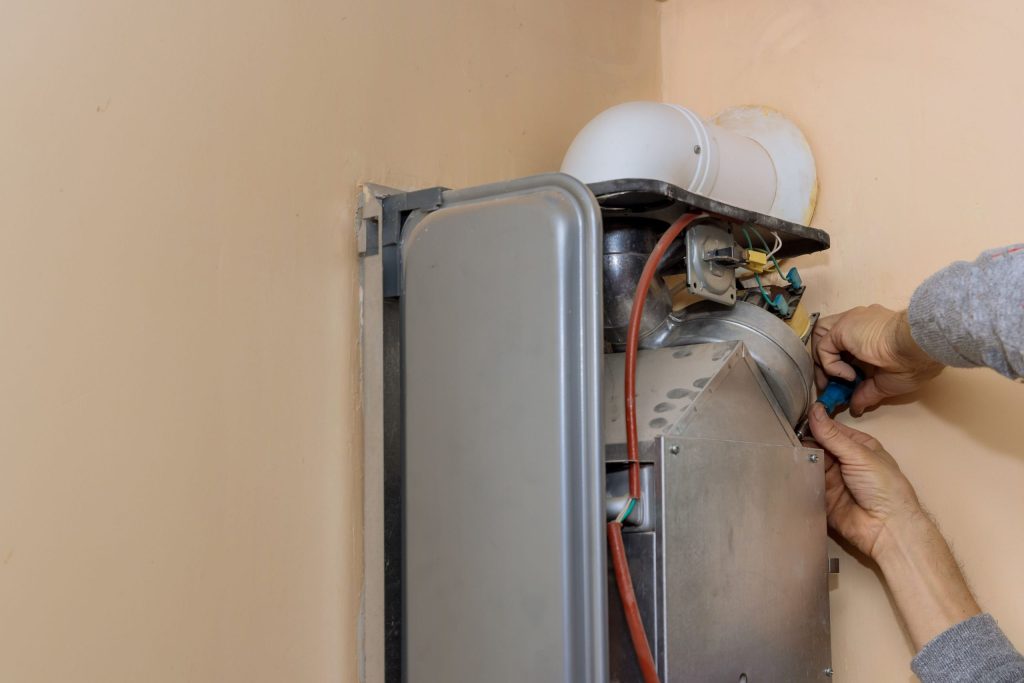
The flue carries combustion products safely outside, so its route, seals, and terminal need careful inspection. The engineer checks that the system is fitted correctly and that the outlet remains unobstructed. Required ventilation must also be present, where the appliance specification calls for it. Blocked or damaged components can interfere with combustion and expose occupants to danger. Testing should confirm safe operation before handover.
Test Combustion and Safety Controls
Once connected, the boiler should be fired and assessed using suitable test equipment. The engineer checks combustion performance, gas rate, and working pressure against manufacturer instructions. Safety controls, including devices that stop operation when a fault occurs, also need verification. A successful start alone does not prove that every component performs correctly. Test results help confirm that the appliance is operating safely under the conditions checked.
Record the Work and Explain Operation
A completed installation should come with relevant documentation, including commissioning information and any required notification. The engineer should explain the controls, safe shutdown procedure, and maintenance needs. Occupants benefit from knowing where the isolation valve sits and whom to contact if a concern arises. Keeping paperwork with the appliance manual makes later servicing easier. Clear records also help future professionals understand the system’s installation history.
Recognise When Checks Are Incomplete
Unusual smells, visible damage, repeated shutdowns, or signs of soot should prompt immediate attention. If a gas leak is suspected, occupants should avoid flames and electrical switches, leave the property, and contact the gas emergency service from a safe location. A new boiler should not be used if required testing remains unfinished. Prompt action reduces exposure to hazards and allows a qualified engineer to assess the problem.
Electric Boilers Need Different Checks
Gas safety procedures do not apply to electric boilers because these appliances do not burn fuel or produce flue gases. Their installation instead requires suitable electrical inspection, protective devices, and commissioning by a competent professional. The provider describes its products and installation services as electric heating, so gas-specific checks should not be assumed for those systems. Correctly identifying the boiler type ensures that safety work matches the actual equipment.
Conclusion
Professional checks are an essential part of installing a gas boiler, not an optional final step. A registered engineer can assess the supply, connections, flue, ventilation, combustion, and safety controls before the appliance enters regular use. Proper records and a clear handover help occupants operate the system responsibly. Electric boilers follow a separate safety route, which makes accurate identification important from the outset. Matching each installation to the right checks helps protect people and property.

